
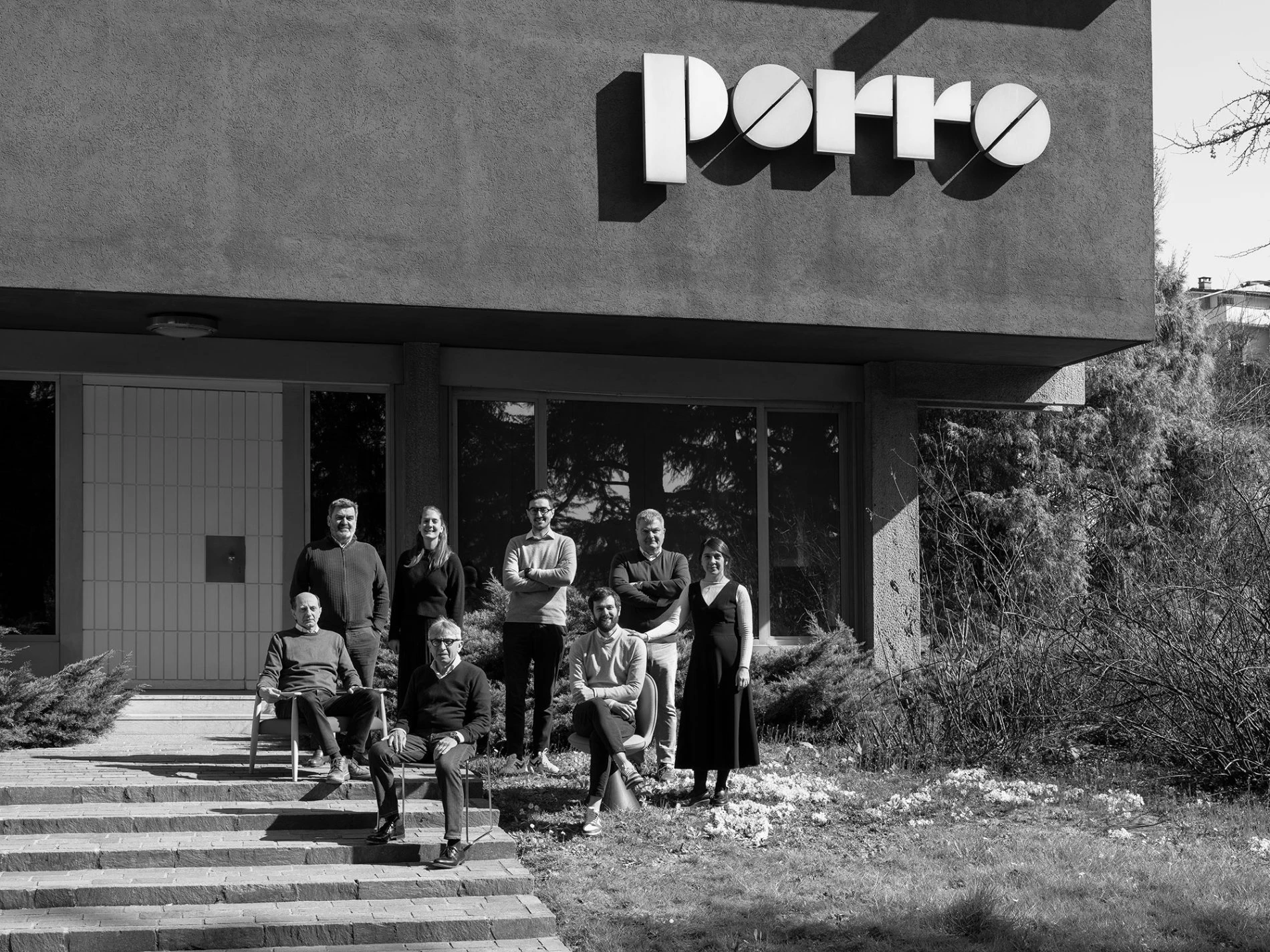
A deep-rooted connection to its homeland, Brianza, and its rich heritage of knowledge, along with lasting relationships with the people—both within and around the company—who, alongside the founding family, have actively contributed to its growth and international expansion.
Porro, the brand that has made innovation its hallmark, celebrates its 100th anniversary with the strength of a network of virtuous collaborations that have accompanied it along its journey, driven by an inexhaustible curiosity and a profound understanding of the culture of Italian design—a culture it belongs to and has helped to shape.
Ongoing research has been the guiding thread throughout Porro’s history, passing from one generation to the next, but also the driving force behind the brand’s continuous evolution, always rooted in the present. Without ever overturning its origins, Porro has laid the foundations for new design languages, evolving both in production and style with a constant push toward the future.
Experimentation with surfaces, the design of cutting-edge technological solutions, and the study of form—pushing the potential of materials to their limits—have always defined Porro’s design philosophy. An apparent simplicity that, time and again, conceals resolved complexities and overcome challenges, merging high craftsmanship with industrial processes, where memory and future harmoniously coexist.
THE HISTORY
The 100-year history of Porro is a tale of dedication, innovation, and family tradition, unfolding across four generations—each one interpreting and responding to the changes of its time.
A family that has evolved while remaining true to its aesthetic vision, defined by purity of form, technological research, and artisanal attention to detail, in a timeless design philosophy that transcends trends, focusing on elegance and the longevity of each creation.
Each generation has embraced its era in a unique way, demonstrating that the ability to live in the present has been key to keeping this design tradition alive and thriving.
The First Generation: Craftsmanship and Passion for Wood
In 1925, brothers Giulio and Stefano Porro, skilled cabinetmakers, open a small workshop to create custom-made furniture reflecting their passion for wood. Each piece is a work of art, meticulously crafted for Milan’s bourgeoisie.
The Second Generation: an Innovative Factory
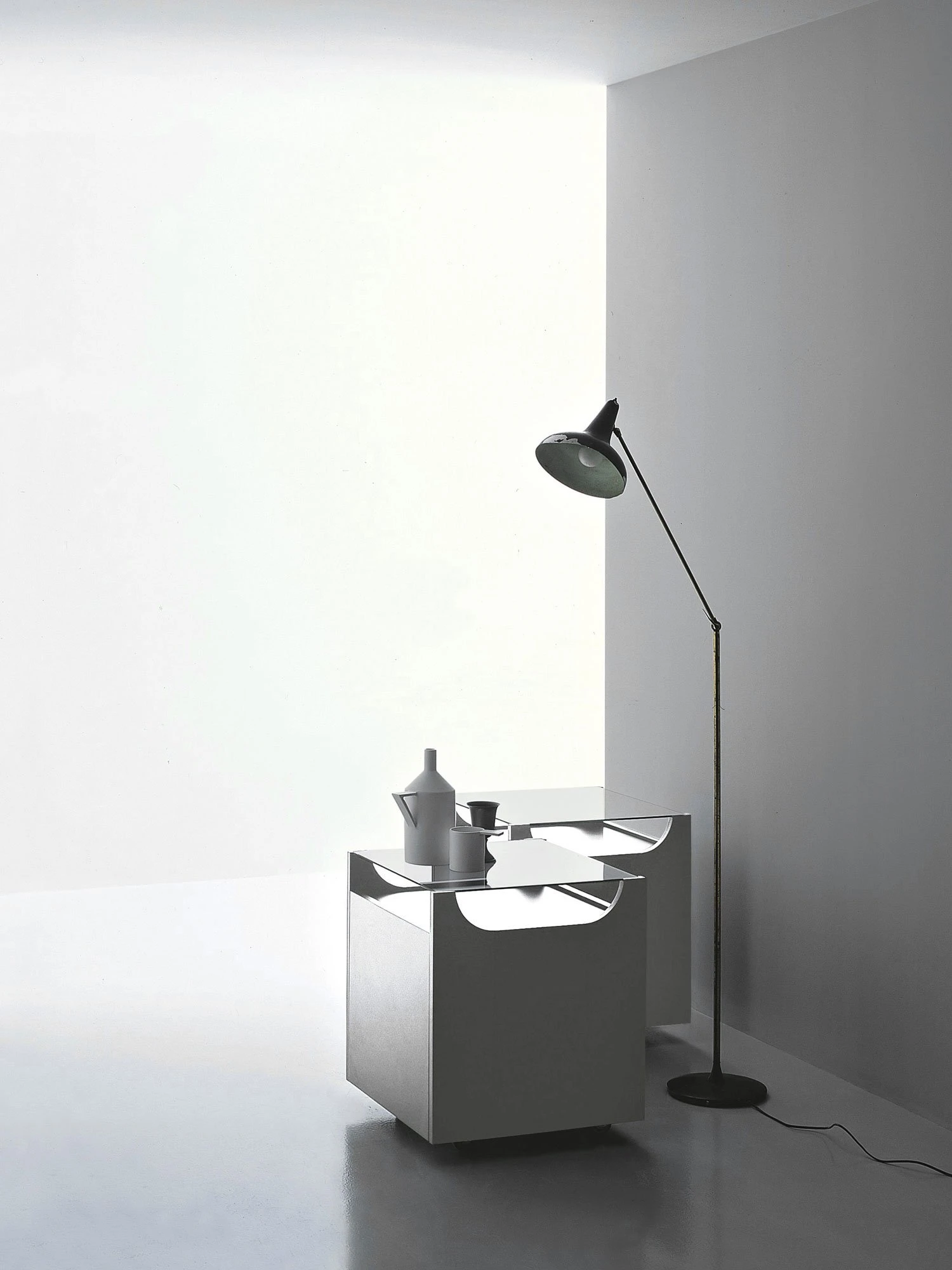
After World War II, during the economic boom, the second generation —cousins Carlo, Arturo, and Silvio—recognize the need to adapt to the changing needs of families. With foresight, they begin producing bedroom furniture, understanding the importance of meeting the demands of a growing society while keeping wood at the core of their production. This transformation turns Porro into a full-fledged industry, already looking towards design with early collaborations, such as Bruno Munari, who created the Porro logo (and the Cubovo trolley, still part of the Porro collection).
The Third Generation: Design and Functionality
The third generation—Lorenzo, Fabio, Giovanni, and Danilo Porro—transform the company by introducing digitalization, revolutionizing both production and design processes. They focused on design, starting a collaboration with Piero Lissoni. Through modular systems featuring seemingly simple yet complex solutions, Porro merged aesthetics with functionality, shaping an innovative and distinctive brand identity.
The Fourth Generation: Towards a Global and Sustainable Future
Since the 2000s, with the arrival of Maria, the marketing and communication director, Porro has transformed into a company capable of establishing a dialogue with a global audience, fostering the creation of a network of architects, designers, and professionals from all over the world, with a focus on collaboration and innovation. In parallel, production expands on an architectural scale, offering tailor-made solutions that shape spaces and make them dynamic, conceiving furniture not as an isolated element but as a tool for design. This evolution leads to innovative and just-in-time production, strengthening a lean approach aimed at sustainable growth and the optimization of production processes. This direction is further consolidated by the arrival of Maria's cousins: Giovanni Porro, coordinator of the management and quality system, Giulio Porro, procurement specialist, and Beatrice Porro.
TURNING POINTS
MOVEMENT IN UPHOLSTERY
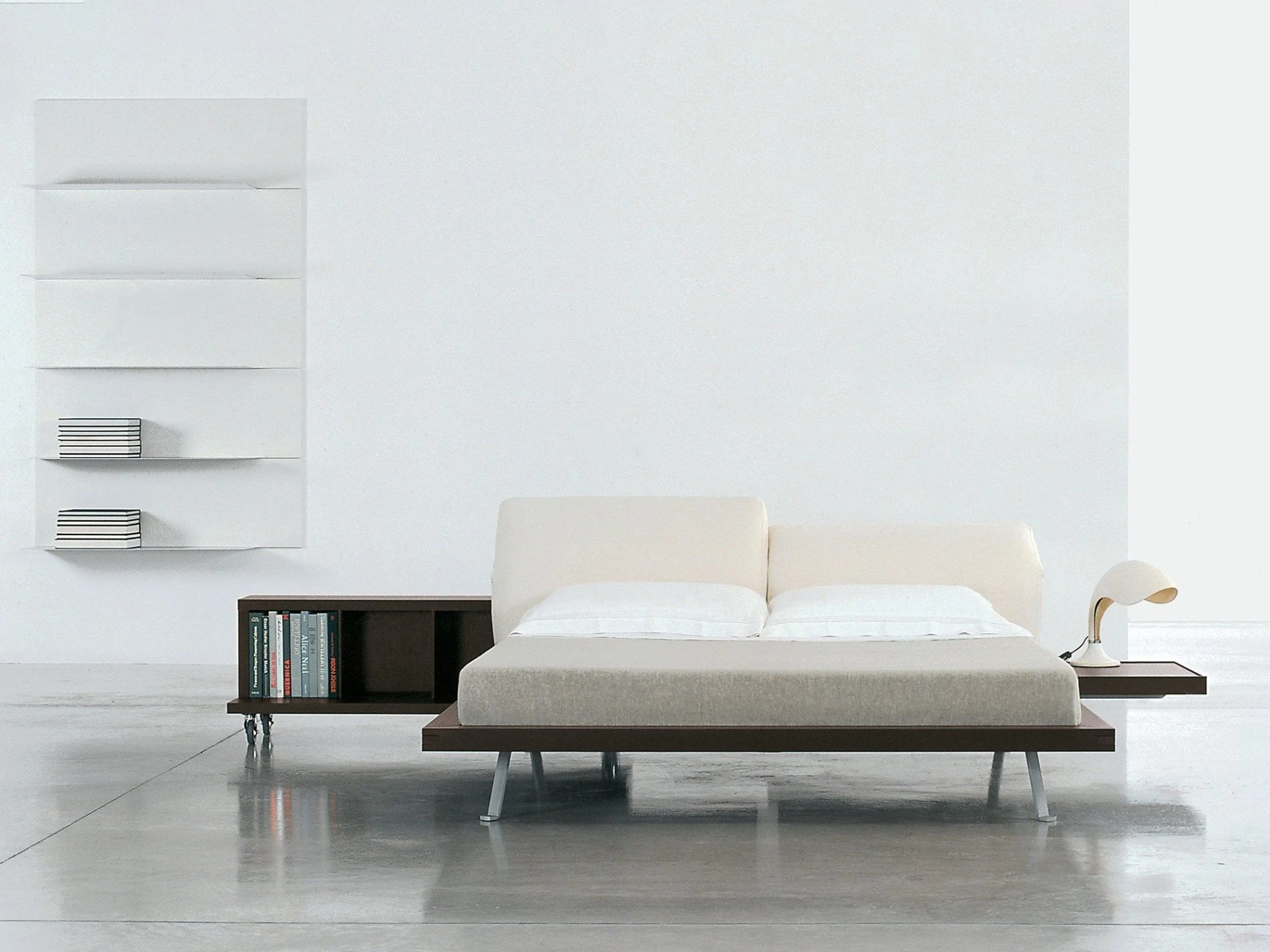
SHINTO, Design Piero Lissoni, 1992
The Shinto bed revolutionized the concept of the sleeping area by introducing, for the first time, a central core around which other elements move freely: an adjustable and removable upholstered headboard, a wheeled storage unit, and bedside tables on coplanar surfaces. This design creates a space with endless possibilities while maintaining a precise geometric rigor.
RESHAPING THE TABLE
FERRO, Design Piero Lissoni, 1994
Refined details and striking visual impact define Ferro, a table with a sensual curved silhouette, softened edges, and wide-radius junctions. Made from bent and welded sheet metal, it is available in fixed or custom dimensions, including an outdoor variant. For the living area, Ferro’s carefully calibrated design is reinterpreted as a low table, h.400 mm: a visual icon with a light aesthetic, perfect as a centerpiece to create a sophisticated yet inviting atmosphere, exuding innate elegance.
"Some of Piero Lissoni’s pieces have become true icons, and it’s always fascinating to understand their origins—sometimes born from a mistake, sometimes from intuition. Take the Ferro table, for example: Piero was on a plane, looking at the shape of the aircraft wing, noticing the curved sheet metal, and imagining a table with that form. He made a quick sketch, showed it to my father, and in no time, the company had built a prototype. Then the table arrived at our home—I was just a kid. The problem was setting the table because the curved edge meant the plates had to be placed at a certain distance. I remember a heated argument between my parents, with my mother insisting the design was absurd: ‘How could anyone think of a table like this? And yet, this table turned out to be extraordinary—an icon. To this day, in Piero’s New York studio, you’ll find that very same table.” Maria Porro.
THE BOOK, NOT THE BOOKCASE
LOAD-IT, Design Wolfgang Tolk, 1995
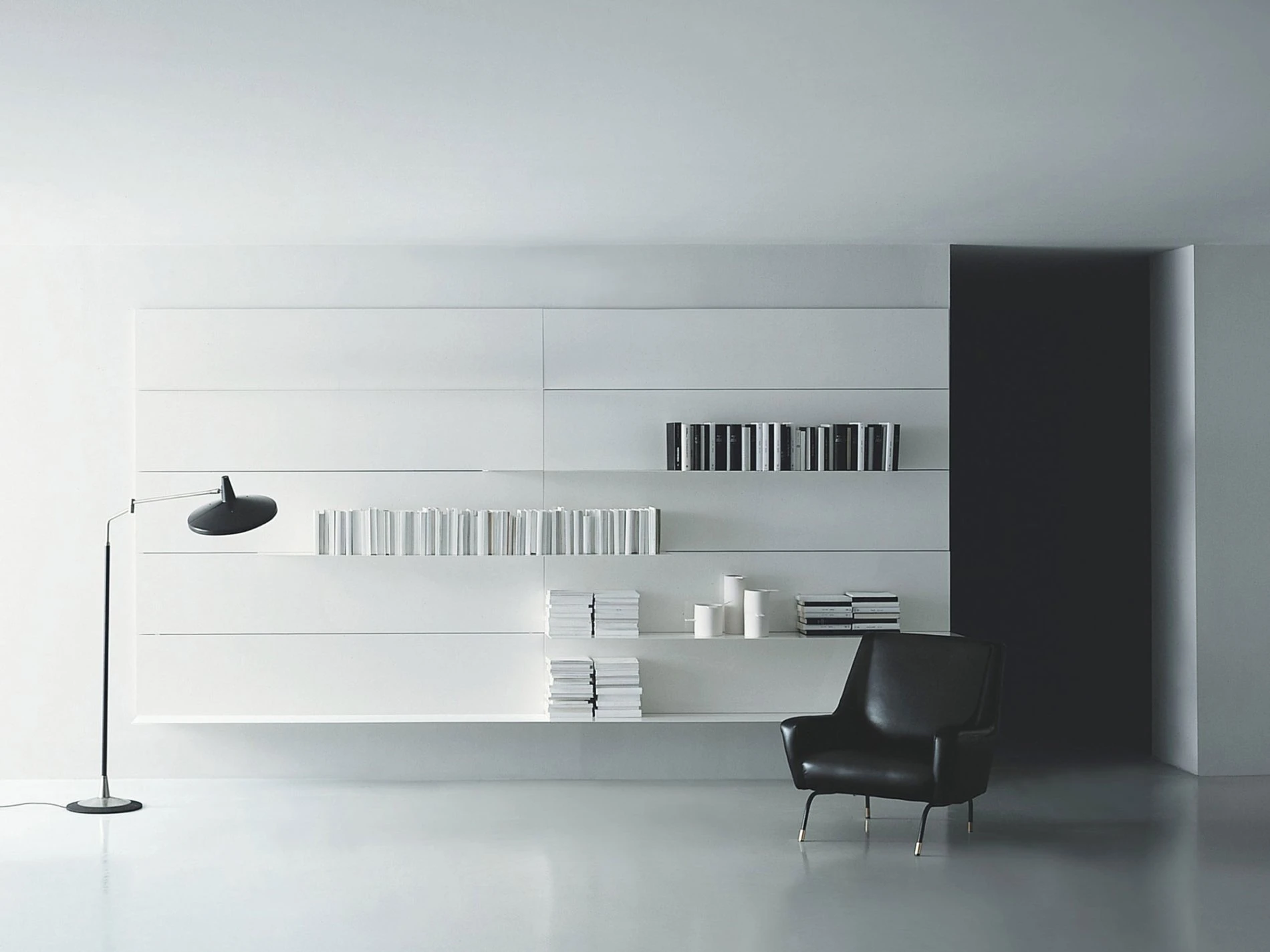
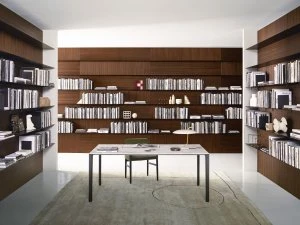
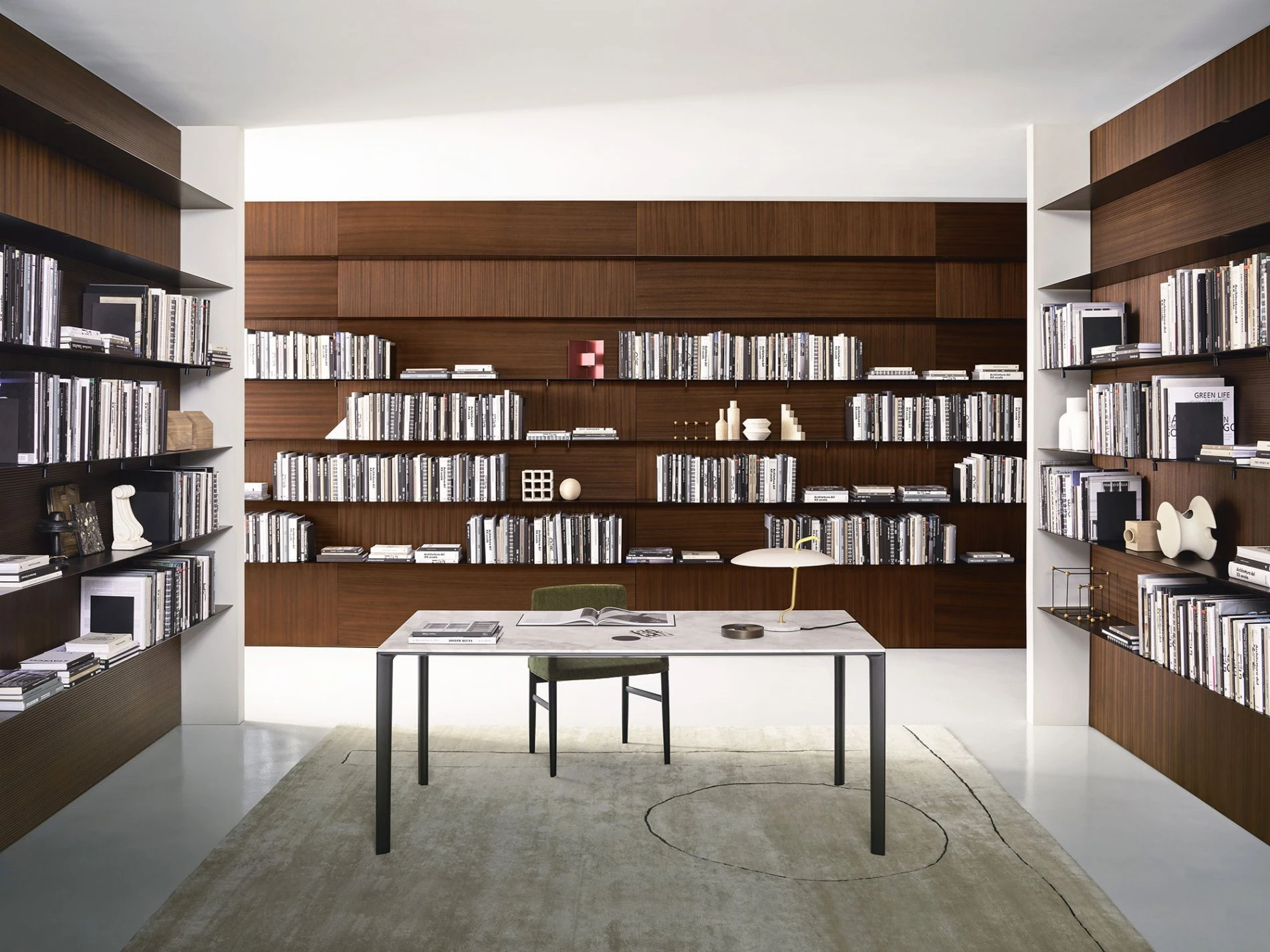
Characterized by its protruding shelves that cut through space, the Load-it bookcase system is a Porro classic that has maintained its strong iconic presence over the years while progressively gaining new functionalities and design possibilities. Originally conceived as a completely white bookcase that blends into the wall, creating the illusion of books floating in midair, Load-it has evolved over time, incorporating new materials and finishes without losing its distinctive identity and expressive power—a design gesture as simple as it is radical. Its essential concept, where ultra-thin L-shaped shelves in cold-bent steel serve as the structural element, paired with wall panels in steel or wood, continues to evolve, by experimenting with new materials and finishes, Load-it adapts to emerging trends and lifestyles, ensuring its relevance and contemporary appeal across generations.
THE WALL UNIT BROUGHT INTO THE LIVING AREA
MODERN, Design Piero Lissoni + Porro Research Center, 1996
"Modern is the result of two architects falling in love with an idea. Born in 1996, it stemmed from a conversation I had years earlier with Lorenzo Porro—wondering if we could rethink an architectural model on a smaller scale, within a home, evolving over time. It’s easy to design something that lasts a season or two, but a system must be built to endure—it has to be born with this kind of imprinting. Modern is almost a mathematical model. It started as a square matrix that we multiplied over time. Then the square was reshaped, its proportions changed. And from 1996 to 2025, Modern is still here." Piero Lissoni.
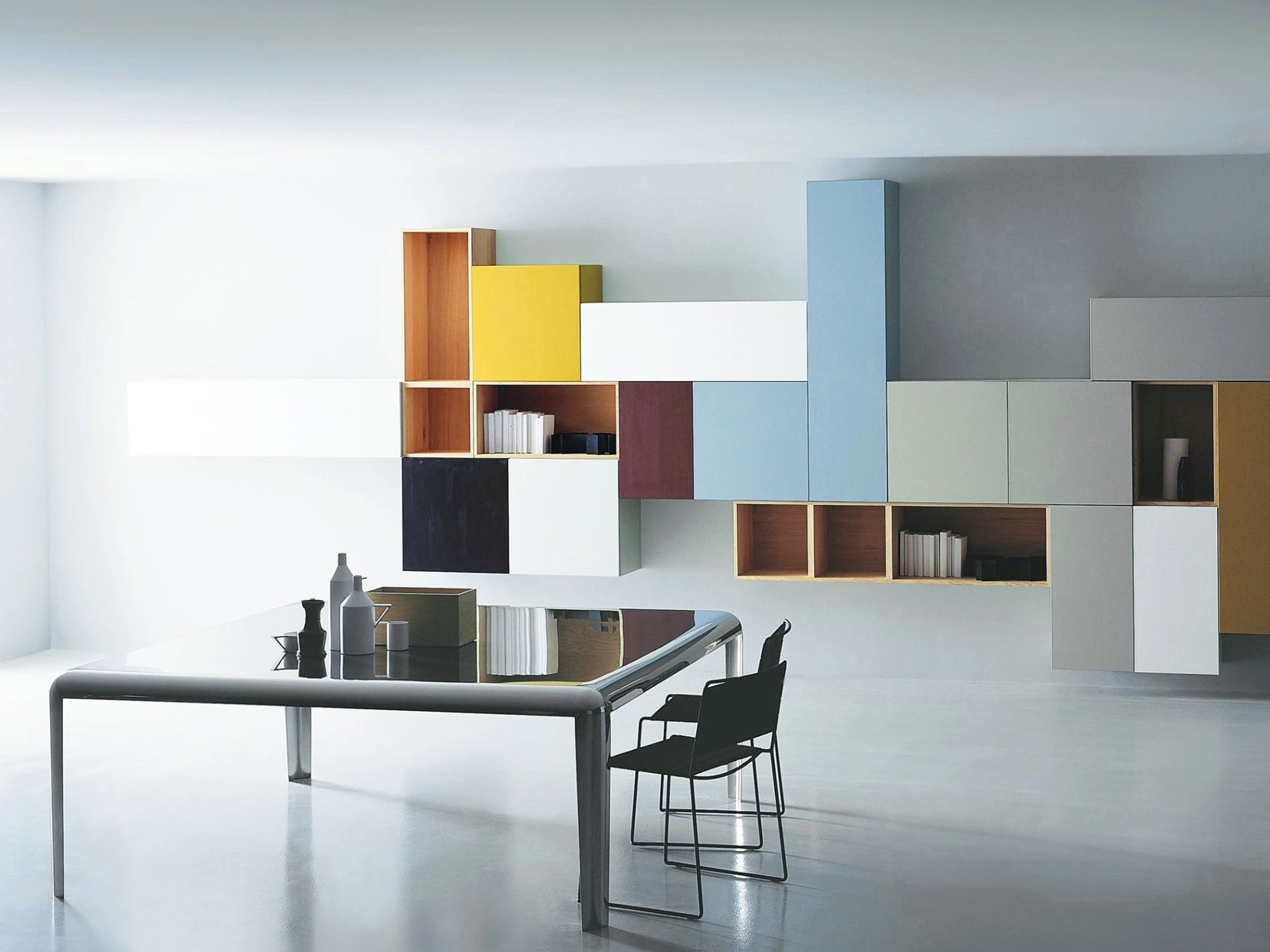
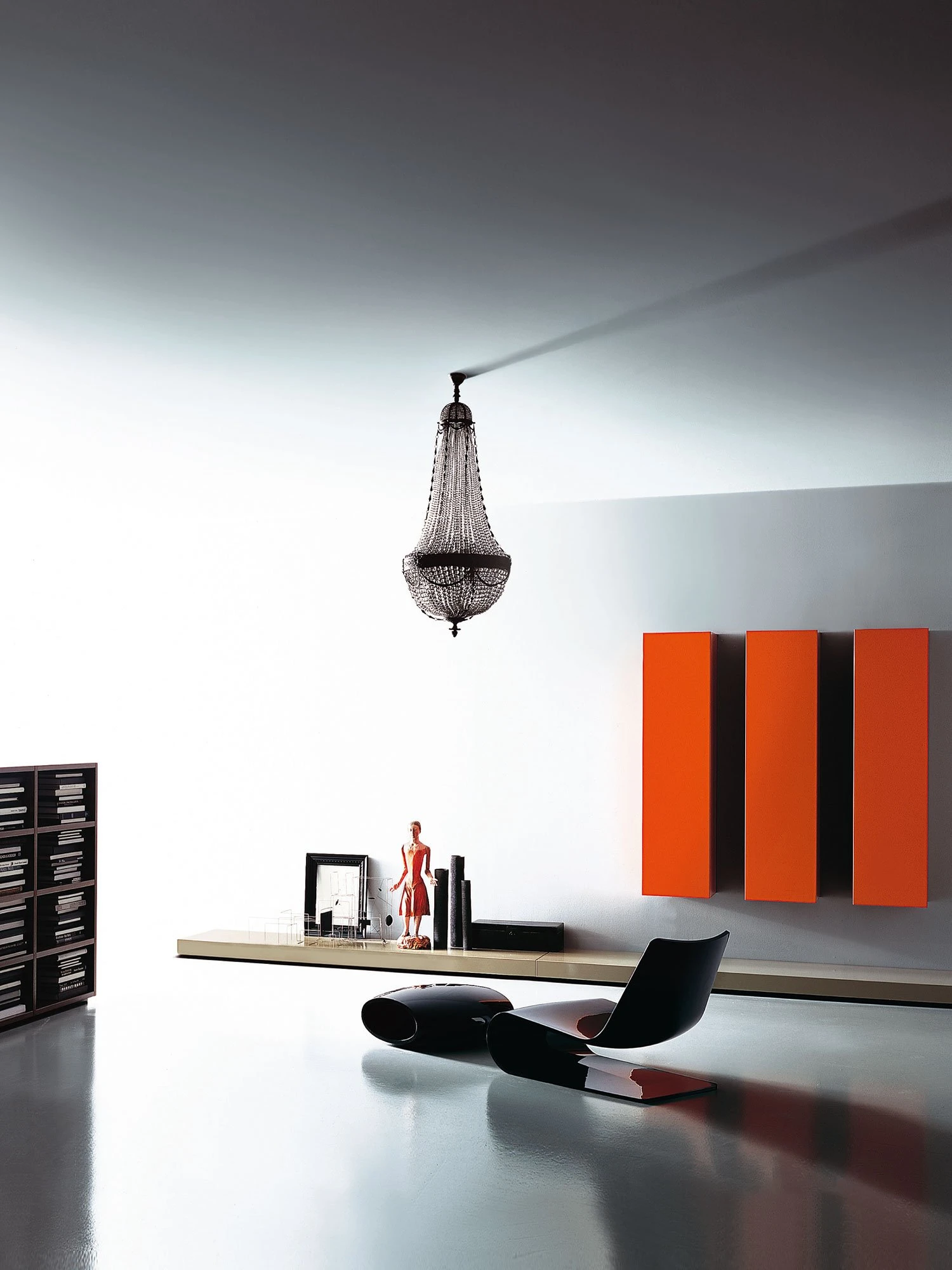
Inspired by the idea of bringing kitchen wall units into the living area, Modern transforms storage elements into a dynamic interplay of shapes and colors. With carefully curated finishes, a refined mix of wood veneers and lacquers, and endless customization possibilities, Modern is designed to reflect the unique identity of each individual—offering limitless compositions that seamlessly integrate into contemporary living spaces.
INVENTING THE CABINET WITHOUT SIDES
STORAGE, Design Piero Lissoni + Porro Research Center, 2000
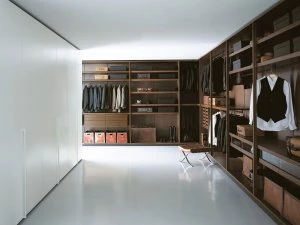
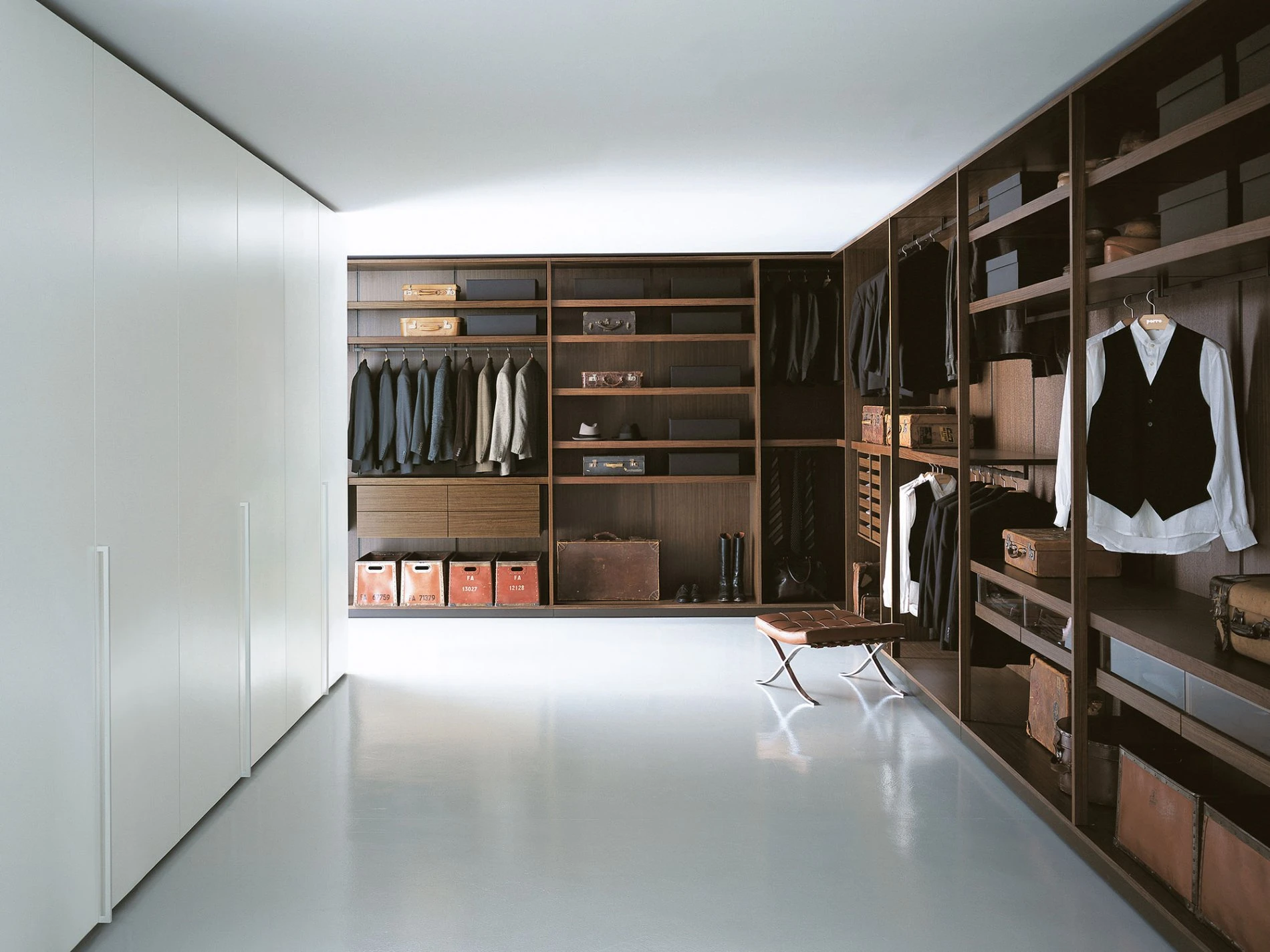
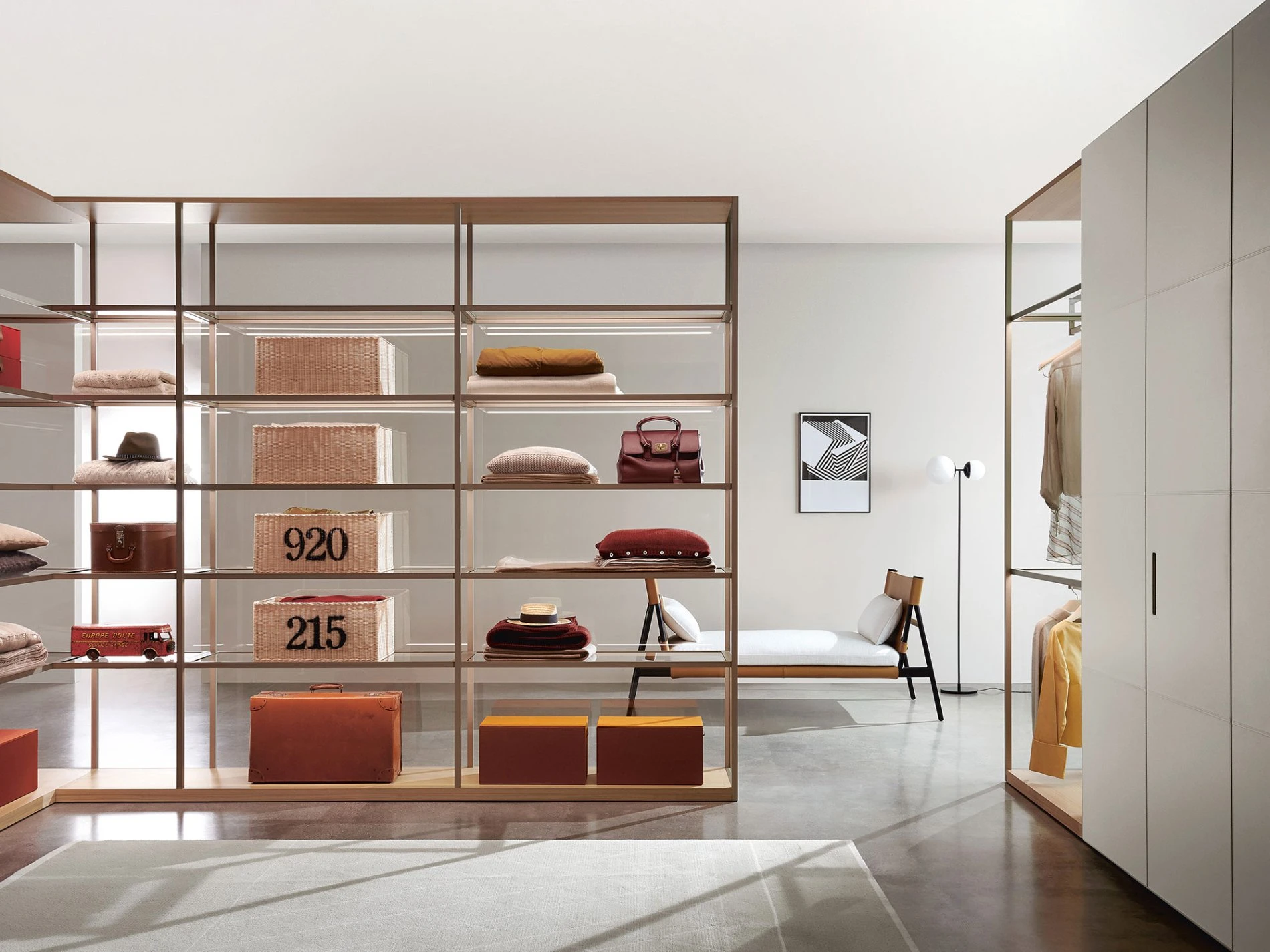
With three different structural concepts, Storage is the first modular system that allows for continuity of space throughout the wardrobe. The innovation stems from the new conception of the supporting element of the structure. Traditionally viewed and designed as a separator within wardrobes, with Storage, the side panel is no longer a barrier but becomes the element that enables the airy continuity inside the wardrobe, while still performing its function as a structural support and a base for horizontal elements. Inside the wardrobe, the concept of space takes on new meaning. Thanks to the three distinct structural types—walk-in closet, traditional wardrobe, and boiserie—that now integrate seamlessly with one another, it’s possible to create both open and closed spaces by alternating different materials for transparent and non-transparent solutions.
TECHNOLOGY AND CRAFTSMANSHIP
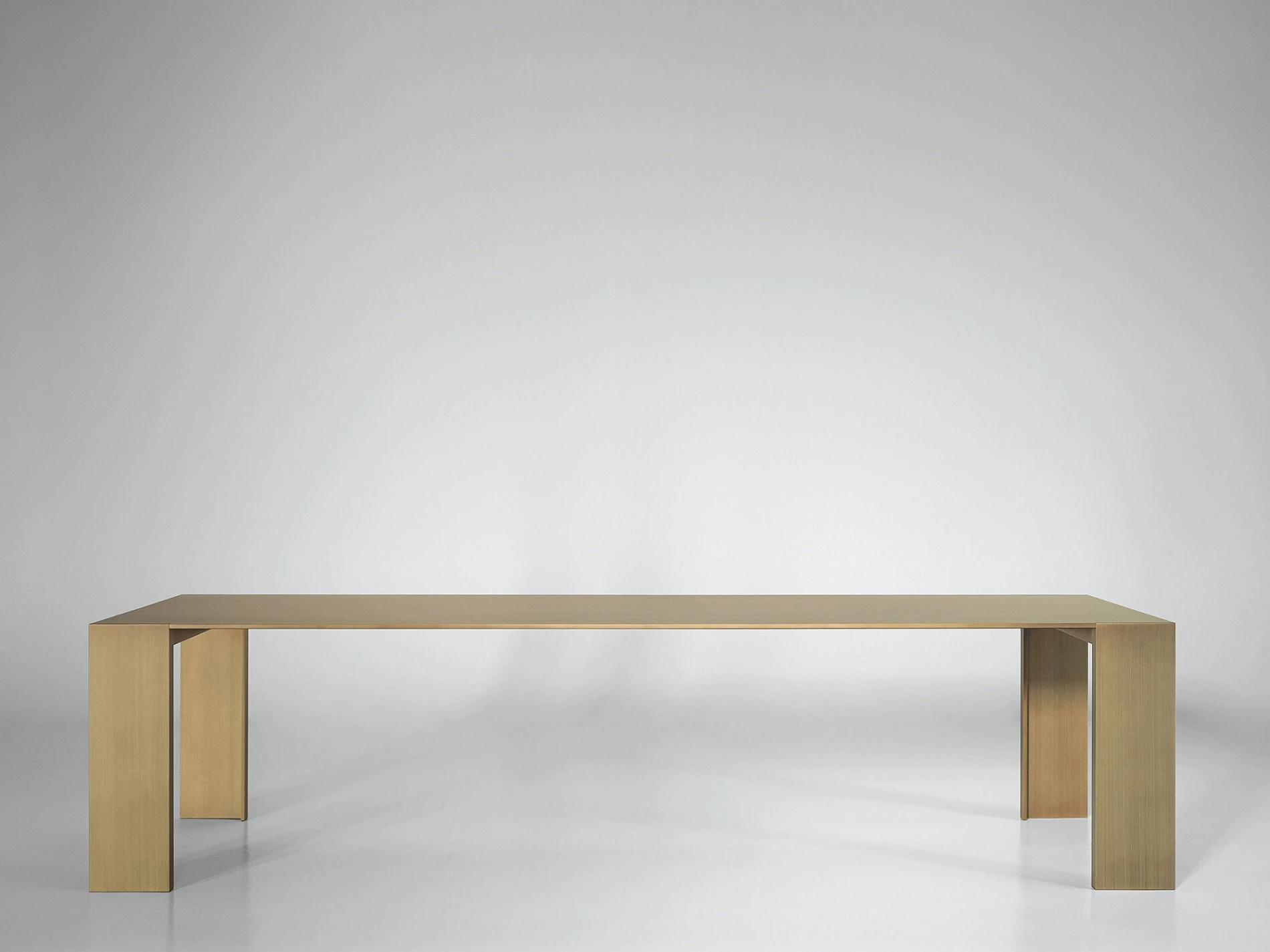
METALLICO, Design Piero Lissoni, 2011
Delicacy and strength merge to create a timeless table: a pure volume capable of conveying solid elegance. The carefully designed connection between the leg and the aluminum sheet top showcases the power of technology, allowing for precise lines and reduced thicknesses in a combination of extraordinary elegance. The unique surface finish is achieved through a high-thickness catalyzed paint, followed by hand polishing and waxing.
Technology and craftsmanship, two seemingly opposing approaches, coexist in this product made of solid aluminum—a material that can effortlessly endure for the next 2000 years—coated with a paint inspired by Caravaggio’s oil paintings.
A TRANSPARENT BOX
EX-LIBRIS, Design Piero Lissoni, 2011
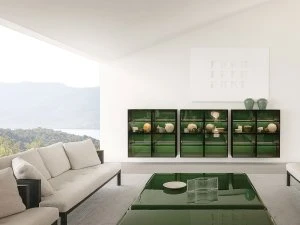
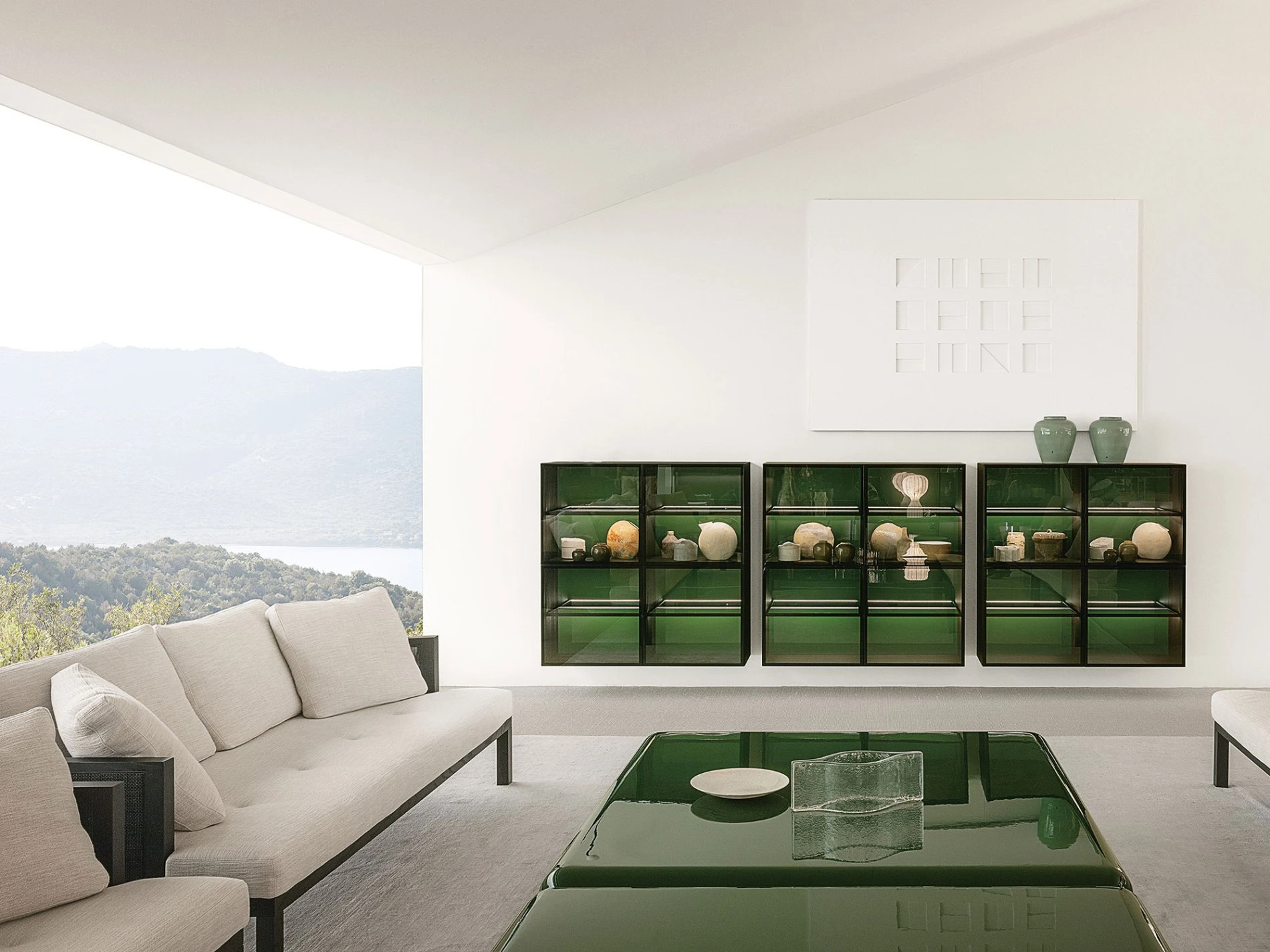
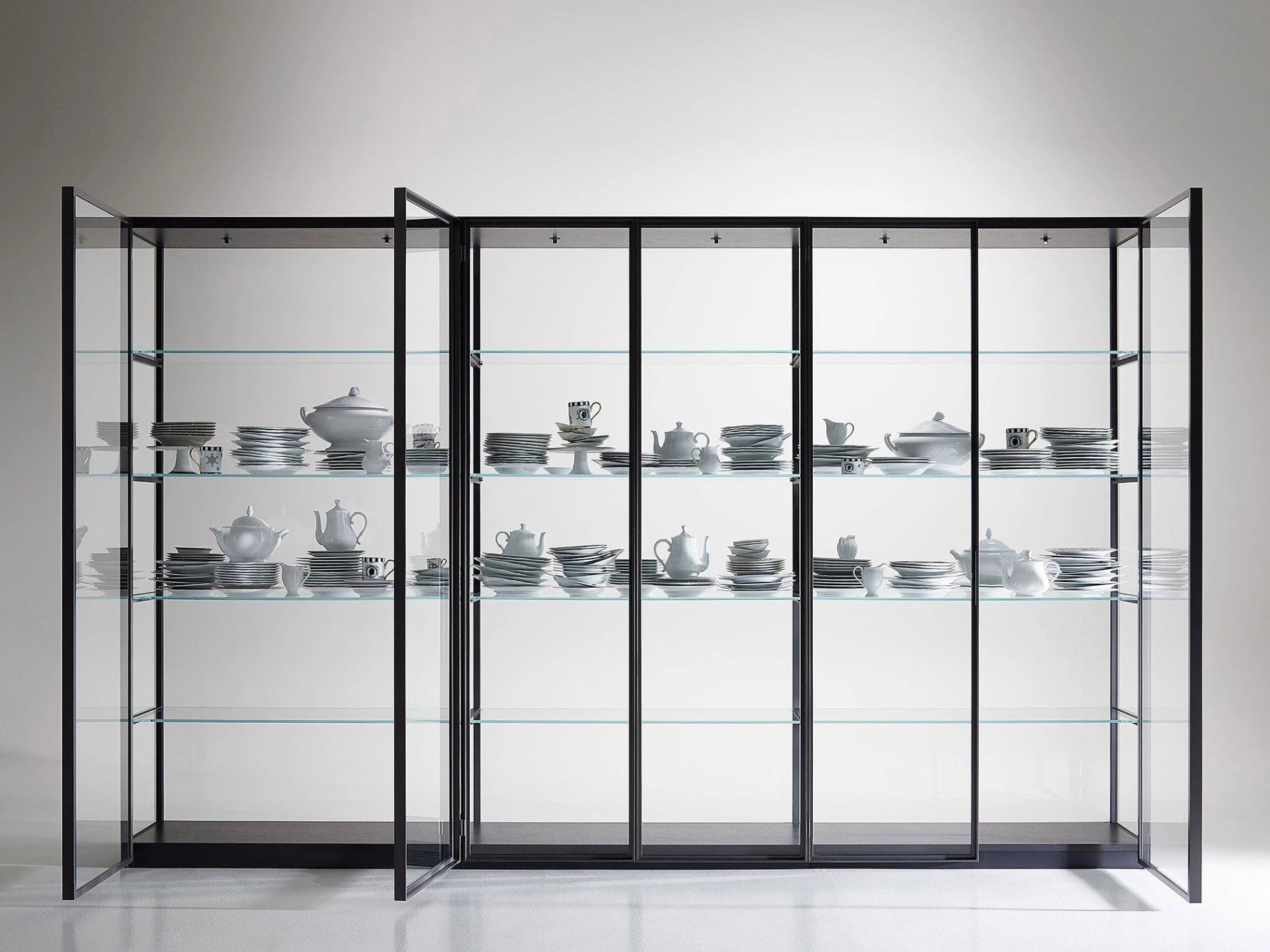
Born from research on freestanding cabinets, Ex-Libris is a precious display case both to the touch and the eye, designed to store and showcase rich collections. The supporting structure consists of aluminum uprights, a melamine base and top, and crystal sides available in varying degrees of transparency. The back panels can be made from melamine, fabric, or crystal, enhancing the ethereal aesthetic of this transparent box—ideal for central room compositions that divide spaces while maintaining visual communication. The shelves, in transparent extra-clear glass, contribute to the magic of this piece, where objects appear to float in the air, protected by sculptural Iron doors or minimalist flush Block doors. To illuminate the interiors, one or two spotlights can be added to the top of each module.
CONTEMPORARY CRAFTSMANSHIP
ROMBY, Design GamFratesi, 2020
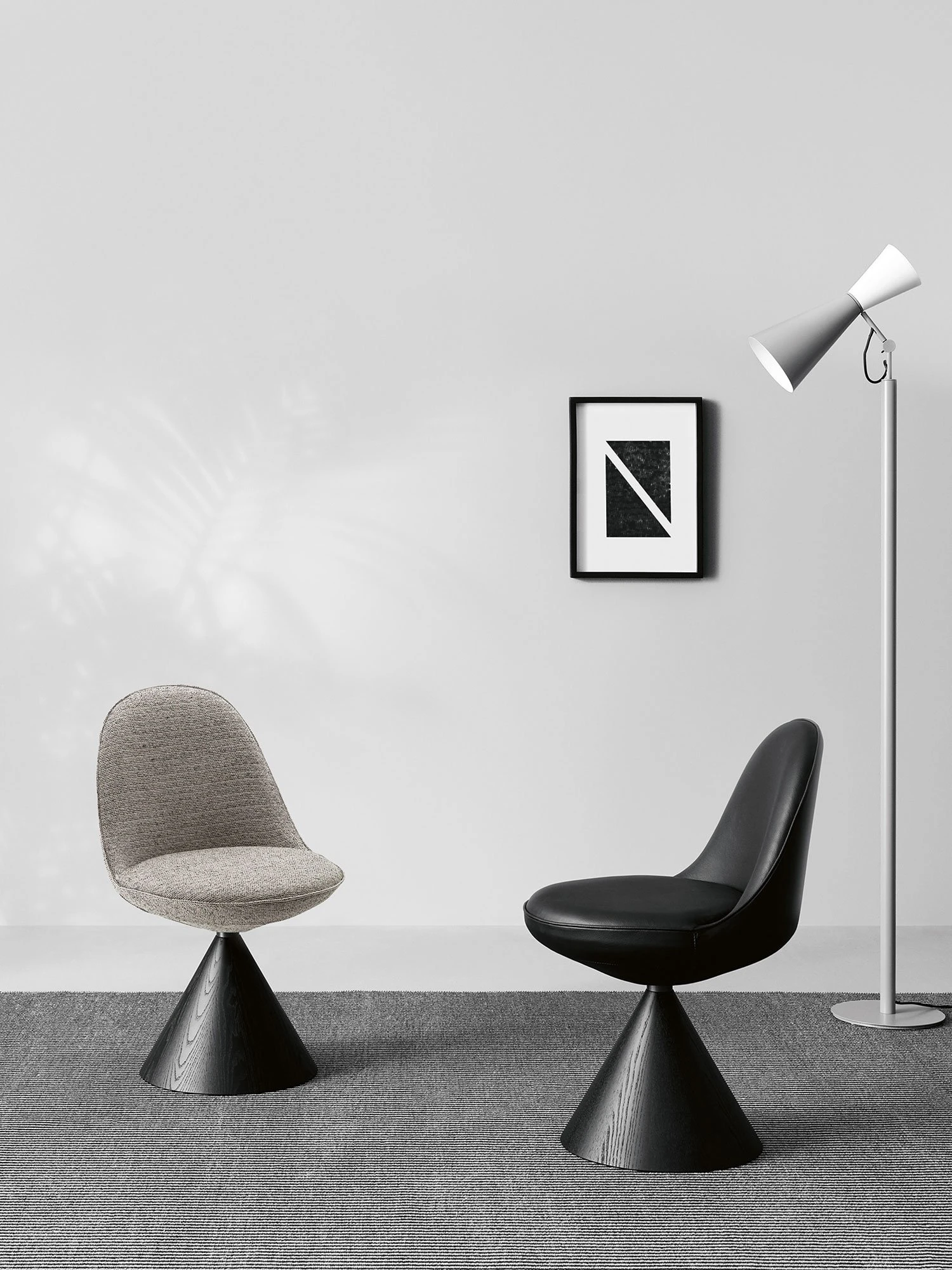
Geometric allure and vintage-inspired design give the Romby chair an abstract charm. The conical base, crafted from solid ash wood with a tapered shape created in wedges through a cabinetmaking technique, connects to a soft, compact, padded swivel seat, upholstered in Porro's selection of leathers or fabrics.
Perfect for a dining room or a cosy workspace, Romby is a cocoon-like armchair with impeccable proportions and craftsmanship. It has subtly become the “manifesto” piece of Porro design, effortlessly conveying the brand's essence with its geometric purity, manufacturing excellence, and artisanal flair.
THE RESEARCH INTO FINISHES
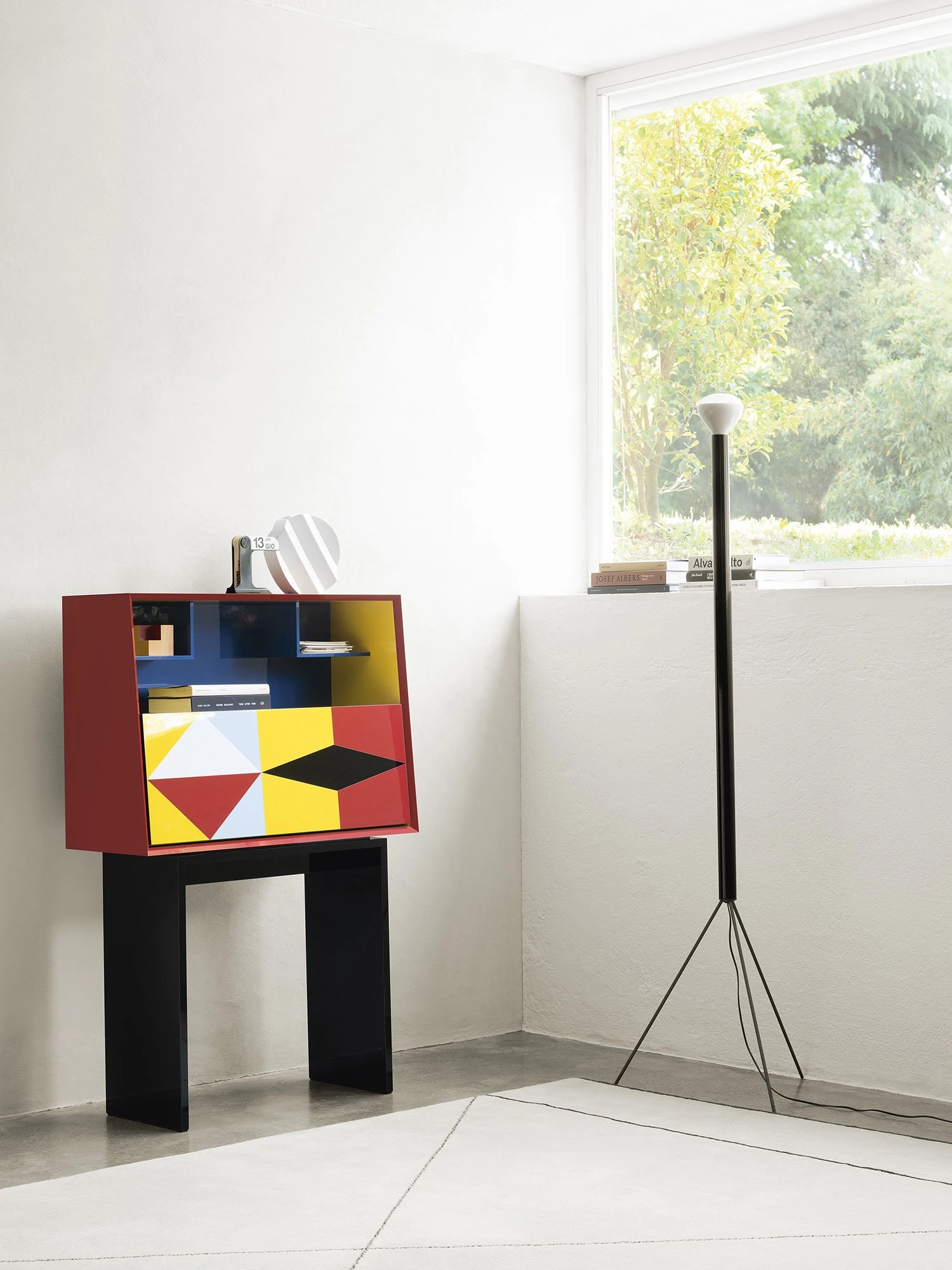
LINEA, Design Alessandro Mendini, 2023
From the family's renowned expertise in woodworking—where they still personally select the wood species and grains—to an inexhaustible curiosity for materials in all their forms, drawing inspiration from a wide array of sources. With a highly flexible industrial production that works just-in-time from custom designs and an incredible range of finishes —including 19 wooden essences, 31 glossy and matt lacquers, 31 back-painted glasses, 3 types of glass, 7 interior wardrobe finishes, and 5 metal finishes, along with leathers, fabrics, solid woods, marbles, and straw—Porro allows the creation of impeccable interiors, each time with a distinct character, tailored to one's space and desires.
IT’S ALL ABOUT PEOPLE
26.03.25
更多图片/
收起图片-